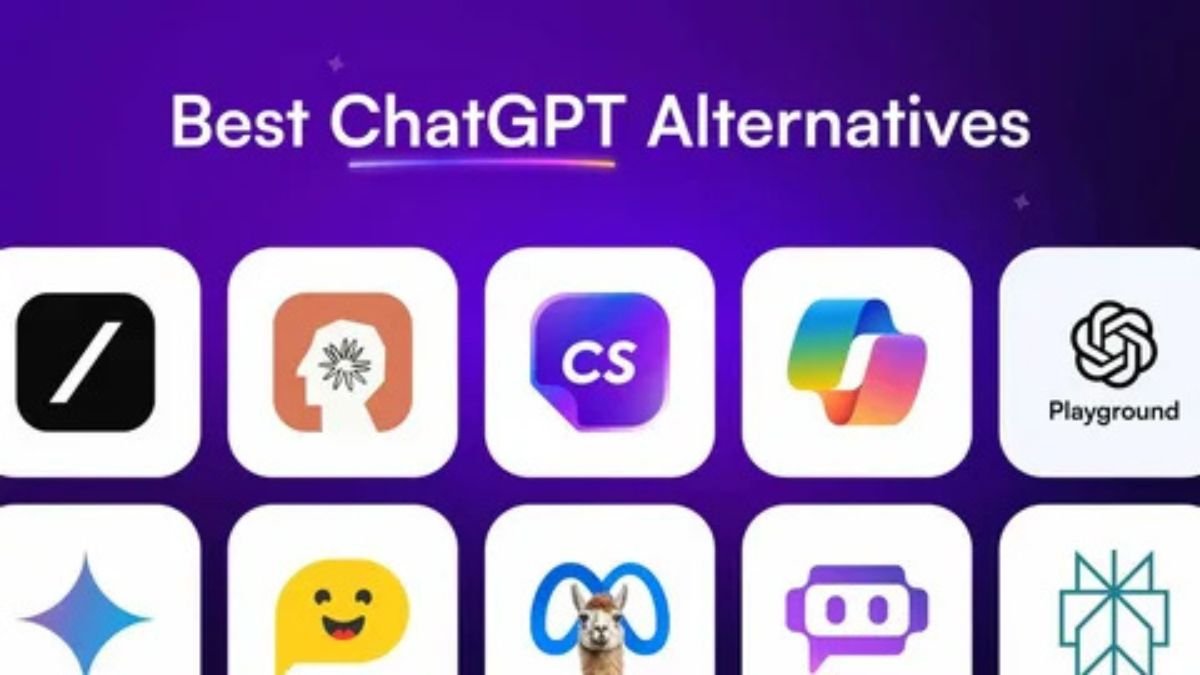
Beyond the Bot 2026: The landscape of generative artificial intelligence has shifted from a singular focus on experimental chat interfaces to a diversified ecosystem of specialized platforms. While OpenAI set the initial standard for conversational models, the current market offers a sophisticated array of options tailored for specific industries, technical requirements, and creative ambitions. Professionals and enterprises are increasingly looking beyond a one-size-fits-all approach to discover how specialized models can integrate more effectively into their unique workflows. This transition marks a new era where the selection of an AI partner is based on specific performance metrics, data privacy standards, and the depth of domain-specific knowledge. Finding the right ChatGPT alternatives is no longer just about finding a backup option; it is about strategically selecting a tool that aligns with your professional objectives and technical ecosystem.
The Strategic Shift Toward Specialized AI Models
The rapid evolution of large language models has led to a significant diversification in how we interact with digital intelligence. Early adopters initially relied on a single general-purpose interface for every task, from writing emails to debugging complex code, but the limitations of such a broad approach have become apparent as professional needs grow more complex. Today, the most effective implementations of artificial intelligence involve selecting tools that are fine-tuned for specific contexts, such as deep technical research, high-velocity marketing, or secure internal data processing. This shift represents a maturation of the industry where users prioritize the quality of output and the reliability of citations over the novelty of the interaction itself. By exploring the wider market, users can leverage platforms that offer superior performance in niche areas where general models might struggle with nuance or specific technical requirements.
Enterprises are leading this movement toward diversification because they require higher standards for data security and accuracy than a public-facing chatbot can always provide. The emergence of proprietary and open-source models has allowed organizations to deploy AI solutions that live within their own secure environments, ensuring that sensitive intellectual property is never exposed to external training sets. These specialized ChatGPT alternatives often provide better integration with existing enterprise software, allowing for seamless data flows and more predictable outcomes in production environments. As we look at the broader landscape, it becomes clear that the value of an AI tool is defined by its ability to solve specific problems with precision. This strategic adoption allows teams to build a comprehensive toolkit that combines the strengths of various engines to achieve a level of productivity that was previously unattainable with a single solution.
Claude and the Power of Constitutional AI
Anthropic’s Claude has emerged as a formidable leader in the field, often cited as one of the most reliable ChatGPT alternatives for users who value nuanced reasoning and safe, ethical outputs. Built on a foundation of constitutional AI, Claude is designed to adhere to a specific set of principles that guide its behavior, resulting in a conversational experience that feels more grounded and less prone to the erratic hallucinations sometimes seen in other models. Its ability to process massive amounts of information through an expansive context window makes it particularly valuable for professionals who need to analyze long documents, legal contracts, or entire code repositories in a single session. This focus on depth and stability has made it a favorite among researchers and writers who require a high degree of coherence over extended projects.
Beyond its safety features, the technical architecture of Claude allows for a remarkably sophisticated grasp of tone and style, making it an excellent choice for those looking for high-quality writing assistance. Unlike models that can sometimes feel overly formulaic or repetitive, Claude tends to produce prose that is more fluid and human-like in its construction. This makes it a powerful component of a suite involving ai content generator tools, as it can adapt to complex brand voices and maintain a consistent narrative thread across multiple chapters or reports. The model’s performance in coding tasks and logical reasoning also rivals the best in the industry, providing a versatile platform that balances creative potential with rigorous analytical capabilities. For organizations that prioritize a helpful, honest, and harmless AI partner, Claude stands as a top-tier choice for modern operational needs.
Google Gemini and the Depth of Ecosystem Integration
Google Gemini represents a significant leap forward in multimodal intelligence, designed to function across text, images, video, and audio from the ground up. As one of the most visible ChatGPT alternatives, Gemini benefits from its deep integration with the vast Google Workspace ecosystem, allowing users to pull information directly from their emails, documents, and spreadsheets into the AI interface. This level of connectivity transforms the AI from a standalone assistant into a central hub for personal and professional productivity. The ability to verify information against the world’s most comprehensive search index provides an added layer of confidence, as users can often double-check the sources of the information provided by the model in real-time. This makes it an indispensable tool for those who already rely on the Google cloud infrastructure for their daily tasks.
The power of Gemini lies not just in its search capabilities but in its massive context window, which allows it to digest and reason over hours of video or thousands of lines of code with ease. This capability positions it as a leader for developers and multimedia creators who need an assistant capable of understanding complex, multi-layered projects. When combined with other ai video creator tools, Gemini can serve as the brains behind the creative process, helping to script, organize, and refine video content before it goes into production. Its multimodal nature means it can interpret a visual storyboard just as easily as it can write a technical manual, offering a level of versatility that is difficult to match. As Google continues to refine its models, the synergy between search, productivity apps, and generative intelligence makes Gemini a cornerstone of the modern AI landscape.
Microsoft Copilot and the Future of Office Productivity
Microsoft Copilot has redefined how we think about work by embedding advanced large language models directly into the applications where professionals spend the majority of their time. By bringing the power of GPT-4 into Word, Excel, PowerPoint, and Outlook, Microsoft has created one of the most practical ChatGPT alternatives for the corporate world. The primary advantage here is context; Copilot doesn’t just know how to write, it knows about your specific meetings, your recent email threads, and your internal project documents. This allows it to generate summaries, draft responses, and create presentations that are deeply relevant to your specific business environment. The goal is to eliminate the “blank page” problem and significantly reduce the time spent on administrative tasks, allowing employees to focus on higher-value strategic work.
The integration of Copilot extends beyond simple text generation into the realm of data analysis and visual storytelling. In Excel, it can perform complex data modeling and visualization based on natural language queries, while in PowerPoint, it can transform a text-based outline into a professionally designed slide deck. This versatility makes it one of the premier ai content generator tools for business communication, ensuring that every document produced meets a high standard of quality and branding. Because it is built on the Microsoft Azure cloud, it also offers enterprise-grade security and compliance features that are essential for large organizations handling sensitive data. This combination of productivity, context, and security ensures that Copilot remains a dominant force for anyone looking to optimize their professional output within the Windows and Microsoft 365 ecosystem.
Perplexity AI and the Transformation of Search
Perplexity AI has carved out a unique niche by functioning more as an answer engine than a traditional chatbot, making it one of the most essential ChatGPT alternatives for research-intensive tasks. Instead of relying solely on its internal training data, Perplexity browses the live internet to find the most current and relevant information, providing users with a comprehensive summary that includes direct citations to its sources. This transparent approach to information gathering mitigates the risk of hallucinations and allows users to verify facts quickly by clicking through to the original articles or studies. For journalists, students, and analysts, this represents a fundamental shift in how research is conducted, moving away from a list of links toward a coherent, synthesized narrative backed by evidence.
The interface of Perplexity is designed for discovery, encouraging users to dig deeper into topics through suggested follow-up questions and related themes. This creates a recursive learning loop where a single query can lead to a deep understanding of a complex subject in a fraction of the time it would take to conduct a manual search. While it functions primarily as a knowledge engine, it also incorporates features found in other ai content generator tools, allowing users to draft reports or emails based on the research it has just compiled. By providing a bridge between the vast, chaotic information on the web and the structured output of a language model, Perplexity offers a level of utility that is both practical and highly reliable. It is the go-to platform for anyone who prioritizes accuracy and needs to stay informed about rapidly changing global events.
Open Source Models and the Drive for Digital Sovereignty
The rise of open-source artificial intelligence, led by models like Meta’s Llama and the innovations from Mistral AI, has provided a powerful set of ChatGPT alternatives for those who prioritize privacy and customization. Unlike proprietary systems where the underlying code and weights are kept secret, open-source models allow developers to inspect, modify, and host the AI on their own hardware. This is a game-changer for industries with strict regulatory requirements, such as healthcare or finance, where data cannot leave the local network. By running these models locally, organizations can ensure complete data sovereignty while still benefiting from the transformative power of generative AI. This movement has democratized access to high-performance intelligence, allowing even small teams to build custom solutions tailored to their specific needs.
Open-source models also foster a vibrant ecosystem of innovation where the global developer community can contribute to the improvement of the software. This has led to the creation of specialized versions of these models that excel in specific languages, coding tasks, or creative writing. For those exploring ai content generator tools, the open-source community provides a wealth of options that can be fine-tuned on a brand’s specific historical data, ensuring that the AI truly understands the unique voice and requirements of the company. As the performance gap between open-source and proprietary models continues to close, the appeal of having full control over one’s AI infrastructure becomes increasingly compelling. This independence from large tech conglomerates ensures that the future of AI remains diverse, competitive, and accessible to everyone.
The Landscape of AI Content Generator Tools
The market for specialized writing assistants has exploded, with platforms like Jasper and Copy.ai leading the charge as dedicated ai content generator tools. These platforms are built specifically for marketers, copywriters, and business owners who need to produce high volumes of text that is optimized for engagement and conversion. Unlike general-purpose bots, these tools come pre-loaded with templates for everything from Facebook ads to long-form blog posts and product descriptions. They are designed to understand the psychology of marketing, helping users to craft headlines and calls to action that resonate with specific target audiences. This focus on performance and marketing strategy makes them a vital part of a modern digital growth toolkit.
Beyond just generating text, these tools often include features for SEO optimization, brand voice management, and collaborative workflows. A marketing team can define their brand’s specific tone and style guidelines once, and the AI will ensure that every piece of content generated adheres to those standards across different channels. This level of consistency is difficult to maintain manually, especially when scaling content production for global markets. Furthermore, these platforms often integrate with popular CMS and social media tools, streamlining the process from initial draft to final publication. By automating the more repetitive aspects of content creation, these specialized assistants allow creative professionals to focus on the high-level strategy and storytelling that truly drives business results.
Visual Innovation with AI Image Generator Tools
The field of visual arts has been revolutionized by the emergence of ai image generator tools such as Midjourney, DALL-E 3, and Stable Diffusion. These platforms allow anyone to transform a simple text description into a stunning work of art, ranging from photorealistic portraits to intricate architectural designs. Midjourney, in particular, has gained a massive following for its highly artistic and aesthetic outputs, often producing images that possess a level of creative flair that feels intentional and inspired. DALL-E 3, integrated within the ChatGPT ecosystem, excels at following complex instructions and placing text accurately within images, making it a favorite for designers who need precise control over the composition. These tools have effectively lowered the barrier to entry for high-quality visual content, enabling small businesses and individual creators to produce professional-grade graphics at a fraction of the cost of traditional methods.
The impact of these visual engines extends far into professional design, advertising, and entertainment. Creative directors use these platforms for rapid prototyping and storyboarding, allowing them to visualize concepts in minutes rather than days. This accelerated feedback loop leads to more experimentation and more courageous design choices, as the cost of failure is significantly reduced. Stable Diffusion offers an even deeper level of control through its open-source nature, allowing for local installations and advanced techniques like in-painting and control-net, which give artists pixel-perfect influence over the final result. As these ai image generator tools continue to advance, the line between human and machine-assisted art becomes increasingly blurred, leading to a new era of hybrid creativity where the AI acts as a digital brush capable of realizing the most imaginative visions.
The Frontier of AI Video Creator Tools
Video production, traditionally one of the most time-consuming and expensive creative processes, is currently undergoing a radical transformation through ai video creator tools. Platforms like Sora, Runway, and Pika are pushing the boundaries of what is possible by generating high-definition video clips from text prompts or static images. These tools use complex diffusion models to understand the physics of motion, lighting, and temporal consistency, resulting in footage that is increasingly indistinguishable from real-world recordings. This technology is opening up new possibilities for independent filmmakers, social media influencers, and corporate communications teams, allowing them to create dynamic video content without the need for large film crews or expensive studio equipment.
In addition to generative video, the rise of synthetic presenters through platforms like Synthesia has revolutionized the world of corporate training and educational content. These ai video creator tools allow users to create professional-looking videos featuring life-like avatars that speak multiple languages and exhibit natural gestures. This is particularly valuable for global companies that need to produce training materials in dozens of different languages quickly and affordably. Instead of hiring actors and booking recording sessions, a user can simply upload a script and receive a finished video in a matter of minutes. As these technologies mature, we can expect to see AI-driven video play an even larger role in our daily digital consumption, from personalized advertisements to interactive entertainment experiences that adapt to the viewer’s preferences in real-time.
Evaluating the Performance of Large Language Models
| Tool Name | Primary Strength | Best Use Case | Unique Feature |
| Claude 3.5 | Nuanced Reasoning | Complex Analysis & Writing | Artifacts for Real-time Coding |
| Google Gemini | Ecosystem Integration | Research & Multimodal Tasks | 2-Million Token Context Window |
| Perplexity AI | Search & Fact-Checking | Academic & Professional Research | Real-time Web Citations |
| Microsoft Copilot | Office Productivity | Enterprise Document Creation | Deep Integration with Excel/Word |
| Jasper | Marketing Copy | Social Media & Ad Campaigns | Brand Voice & Style Guides |
| Llama 3 | Open Source Power | Local Hosting & Privacy | Community-Driven Fine-Tuning |
| Midjourney | Artistic Imagery | Concept Art & High-End Design | Distinctive Aesthetic Quality |
| Synthesia | Virtual Presenters | Corporate Training & Education | Multi-lingual Humanoid Avatars |
Deep Dive into Coding and Technical Assistance
For developers, the search for the best ChatGPT alternatives often leads to tools that are specifically optimized for the software development lifecycle. Platforms like GitHub Copilot and Cursor have integrated AI directly into the integrated development environment (IDE), providing real-time suggestions that are contextually aware of the entire project structure. These assistants do more than just complete snippets of code; they can help refactor legacy systems, write comprehensive unit tests, and even suggest architectural improvements. This reduces the cognitive load on developers, allowing them to focus on solving high-level logic problems while the AI handles the boilerplate syntax and repetitive tasks. The result is a significant increase in development velocity and a reduction in the time spent debugging common errors.
Technical AI assistants also excel in learning new languages or frameworks, acting as a tireless mentor for programmers at all skill levels. When a developer encounters an unfamiliar library, they can ask the AI to explain the core concepts and provide working examples tailored to their current project. This just-in-time learning capability is invaluable in an industry where technology changes almost every week. Furthermore, the ability of these models to analyze code for security vulnerabilities and performance bottlenecks helps teams maintain a higher standard of software quality. By integrating these specialized tools into their workflow, development teams can build more robust and innovative applications while maintaining a faster release cadence.
Privacy and Security in the Age of Generative AI
As generative AI becomes more integrated into the workplace, the conversation around data privacy and security has moved to the forefront. Many professionals are cautious about using public ChatGPT alternatives because of concerns that their prompts and uploaded documents might be used to train future versions of the model. To address this, many providers have introduced enterprise-grade versions that guarantee data isolation and prohibit the use of customer data for model training. These secure environments allow companies to harness the power of AI without compromising their intellectual property or violating strict industry regulations like GDPR or HIPAA. For many organizations, these security features are the deciding factor when choosing an AI partner for their long-term digital strategy.

In addition to enterprise subscriptions, the trend toward local AI deployment offers the ultimate level of security for sensitive projects. By running open-source models on internal servers or high-performance workstations, data never leaves the organization’s control. This approach is particularly appealing for government agencies, legal firms, and research institutions that handle highly classified information. As hardware continues to evolve, with AI-specific chips becoming common in consumer laptops and servers, the ability to run powerful models locally will become more accessible to everyone. This decentralized approach to AI ensures that the benefits of the technology can be enjoyed without the systemic risks associated with centralized data silos, providing a more resilient and secure digital future.
The Role of Agents and Autonomous Workflows
The next major evolution in the AI space is the move from passive chatbots to active agents that can perform complex tasks autonomously. While early ChatGPT alternatives were focused on responding to a single prompt, the new generation of AI is being designed to interact with other software, make decisions, and see a project through to completion. For example, an AI agent could be tasked with researching a market trend, summarizing the findings into a report, creating a series of social media posts, and scheduling them in a content calendar. This level of automation goes far beyond simple text generation, representing a fundamental shift in how we conceive of digital labor. These agents act as a bridge between various applications, weaving them together into a seamless, high-velocity workflow.
This shift toward agentic behavior is particularly evident in the world of sales and customer support, where AI can handle lead qualification, appointment scheduling, and basic troubleshooting without human intervention. By using ai content generator tools to personalize outreach and ai video creator tools to send video messages, these agents can create a highly engaging experience for potential customers at scale. The key to successful agentic workflows lies in the AI’s ability to understand the goal and the constraints of the task, allowing it to navigate obstacles and adjust its strategy in real-time. As these capabilities become more refined, the role of the human professional will shift from doing the work to managing the AI agents that perform it, leading to a massive expansion in what a small team can accomplish.
Multimodal Capabilities and the Future of Interaction
The future of artificial intelligence is undeniably multimodal, where the boundaries between text, images, and video are increasingly fluid. We are moving toward a world where you can show an AI a video of a broken appliance and ask it to generate a text-based repair guide, or provide a text-based story outline and have it generate a full cinematic trailer. This interconnectedness is a core feature of the most advanced ChatGPT alternatives, which are being trained on a diverse range of data types to better understand the world. This holistic understanding allows the AI to provide more relevant and creative solutions, as it can draw upon visual patterns, linguistic nuances, and temporal logic simultaneously. This makes the AI a much more capable partner in the creative and problem-solving processes.
In the professional realm, multimodality translates to more intuitive and effective communication tools. An architect could use ai image generator tools to create a 3D visualization of a building and then ask a language model to calculate the estimated material costs and write a structural report. This ability to move seamlessly between different modes of expression and analysis will be the hallmark of the next generation of productivity software. As AI models become more adept at processing and generating different media, they will become even more embedded in our creative lives, acting as an extension of our own senses and cognitive abilities. This evolution will not only change how we work but also how we perceive the possibilities of human-machine collaboration in a digital age.
The Ethical Implications of AI Proliferation
As we integrate these powerful tools into every facet of our lives, the ethical considerations surrounding their use become more urgent. Issues such as algorithmic bias, the potential for deepfakes, and the displacement of human labor require careful consideration and proactive management. Many developers of ChatGPT alternatives are now prioritizing transparency and accountability, implementing features like watermarking for AI-generated content and rigorous testing to reduce bias in model outputs. It is essential for users and organizations to develop their own ethical frameworks for AI use, ensuring that the technology is deployed in a way that is fair, responsible, and beneficial to society as a whole. This includes being transparent about when AI is being used and ensuring that there is always a human in the loop for critical decision-making.
Furthermore, the environmental impact of training and running massive AI models is a growing concern that the industry must address. The energy required to power the vast data centers that house these models is significant, leading to calls for more efficient architectures and the use of renewable energy sources. Some providers are responding by developing smaller, more efficient models that offer high performance with a much lower carbon footprint. As the industry matures, the “bigger is always better” mentality is being challenged by a more nuanced focus on efficiency, sustainability, and targeted utility. By choosing AI partners that prioritize ethical development and environmental responsibility, users can contribute to a more sustainable and equitable future for the entire technology ecosystem.
Cost and Accessibility in the AI Marketplace
One of the most practical factors when choosing between various ChatGPT alternatives is the cost of implementation and the overall value proposition. The market has moved toward a variety of pricing models, from free tiers supported by advertising or data collection to premium subscriptions and pay-as-you-go API access. For individuals and small businesses, the availability of high-quality free models like Gemini or Claude’s basic tier has lowered the barrier to entry for advanced AI. However, for power users and large enterprises, the cost of premium features, higher rate limits, and priority access can be a significant investment. It is important to evaluate the return on investment by considering how much time and money the AI tool saves through increased productivity and improved quality of work.
The rise of open-source models also provides a cost-effective alternative for those with the technical expertise to host their own instances. While there are upfront costs associated with hardware or cloud computing, the long-term savings can be substantial, especially for applications that require high-volume processing. Additionally, many ai content generator tools offer tiered pricing based on the number of words generated or the specific features required, allowing users to scale their usage as their needs grow. By carefully analyzing the cost structure and feature set of each platform, users can find an AI solution that fits their budget while still providing the necessary tools to achieve their goals. This democratization of access ensures that even the smallest players can compete in a world increasingly driven by artificial intelligence.
The Human Element in an AI-Driven World
Despite the incredible advancements in generative technology, the human element remains the most critical component of success. An AI is only as good as the prompts it receives and the human oversight that guides its output. The most effective users of ChatGPT alternatives are those who view the technology as a collaborative partner rather than a complete replacement for human thought. They use the AI to generate ideas, draft content, and perform complex calculations, but they always apply their own critical thinking, creativity, and cultural context to the final result. This hybrid approach ensures that the output is not only accurate and efficient but also possesses the soul and resonance that only a human can provide.
“The true power of AI is not found in its ability to mimic human thought, but in its ability to augment the human spirit, allowing us to reach further and dream bigger than ever before.” This perspective highlights the importance of maintaining a focus on human values and objectives as we navigate the rapidly changing AI landscape. As we develop new skills for interacting with these digital minds—such as prompt engineering and AI literacy—we are not just learning how to use a tool; we are learning how to expand our own capabilities. The future belongs to those who can successfully integrate the speed and scale of artificial intelligence with the empathy, wisdom, and creativity of the human experience. By embracing this partnership, we can unlock a new era of innovation and progress that benefits everyone.
Selecting the Right Tools for Your Specific Needs
Choosing the best ChatGPT alternatives requires a clear understanding of your own priorities and the specific problems you are trying to solve. If your primary goal is deep research and fact-checking, a tool like Perplexity AI is likely your best bet due to its real-time web access and citations. For creative writing and nuanced storytelling, Claude 3.5 provides a level of sophistication and coherence that is often unmatched. Meanwhile, if you are looking for ways to streamline your professional workflow within a corporate environment, Microsoft Copilot or Google Gemini offer the best integration with the productivity apps you use every day. By matching the tool’s strengths to your specific requirements, you can build a customized AI toolkit that maximizes your effectiveness.
It is also beneficial to experiment with a variety of platforms to see which one resonates with your personal style and technical needs. Many of the best ai content generator tools, image engines, and video creators offer free trials or basic tiers that allow for low-risk exploration. During this process, pay attention to the user interface, the speed of generation, and the quality of the outputs for your most common tasks. Don’t be afraid to use multiple tools for different parts of a project; for example, you might use one AI for brainstorming and research, another for drafting the content, and a third for creating the supporting visuals. This modular approach allows you to leverage the “best-in-class” features of each platform, resulting in a final product that is superior to what any single tool could produce on its own.
The Evolution of Content Creation Workflows
The integration of ai content generator tools has fundamentally altered the traditional stages of content creation, moving from a linear process to a more iterative and dynamic one. In the past, a writer might spend hours researching, outlining, and drafting before ever seeing a finished product. Today, the initial stages can be completed in seconds, allowing the creator to move immediately into the editing and refinement phase. This allows for a much higher volume of content to be produced, but it also places a premium on the “editor” role of the human creator. The ability to distinguish between mediocre AI-generated prose and truly high-quality, impactful content is now a vital skill for any modern professional.
This evolution is not just about speed; it’s about the ability to experiment with different angles and voices at a very low cost. A marketing team can generate five different versions of a campaign in the time it used to take to create one, allowing them to test and optimize their messaging with unprecedented precision. When combined with ai video creator tools, this allows for the creation of rich, multi-channel experiences that can be tailored to specific audience segments. The key is to use the AI as a catalyst for creativity, using its suggestions as a starting point rather than a final destination. By embracing this new workflow, creators can produce more engaging, relevant, and effective content than ever before, setting a new standard for excellence in the digital age.
Harnessing Visual and Motion AI for Brand Storytelling
In the modern attention economy, visual storytelling is more important than ever, and the use of ai image generator tools is becoming a standard part of the brand toolkit. These platforms allow brands to create unique, high-impact visuals that stand out in a crowded social media landscape without the need for expensive photoshoots or stock photography subscriptions. By defining a specific visual style through custom prompts or fine-tuned models, a brand can maintain a consistent aesthetic across all its digital touchpoints. This level of visual coherence builds trust and recognition with the audience, making the brand’s message more memorable and effective.
The addition of ai video creator tools into the mix further enhances a brand’s ability to tell compelling stories. Whether it’s a short, stylized clip for an Instagram Story or a long-form educational video for YouTube, AI can help produce the content more quickly and at a higher quality than was previously possible for most small-to-medium enterprises. The ability to quickly iterate on video concepts and produce multiple versions for A/B testing is a game-changer for digital marketers. As these tools continue to become more accessible and powerful, the gap between large corporations with massive creative budgets and smaller, more agile teams will continue to shrink. The ultimate winners will be those who can most effectively combine these technological tools with a deep understanding of their audience’s needs and desires.
Future-Proofing Your Career in the AI Era
As the capabilities of ChatGPT alternatives continue to expand, many professionals are wondering how to future-proof their careers in an increasingly automated world. The answer lies not in competing with AI on tasks it excels at—such as data processing and basic content generation—but in doubling down on the uniquely human skills that AI cannot replicate. These include critical thinking, complex problem-solving, emotional intelligence, and high-level strategic planning. By becoming an “AI orchestrator”—someone who knows how to select, guide, and integrate various AI tools to achieve a specific goal—you can become an invaluable asset to any organization. The goal is to move up the value chain, focusing on the “why” and the “what” while delegating the “how” to the machine.
In addition to developing these soft skills, staying informed about the latest developments in the AI landscape is crucial. The field is moving so fast that what was cutting-edge six months ago may already be obsolete. Regularly exploring new ai content generator tools, attending webinars, and participating in online communities can help you stay ahead of the curve. By maintaining a growth mindset and a willingness to adapt, you can turn the AI revolution from a threat into a massive opportunity for professional growth and personal fulfillment. The people who will thrive in the coming decades are those who see AI as a powerful ally that allows them to unlock their full potential and achieve things that were previously thought impossible.
The Role of Community and Open Collaboration
One of the most exciting aspects of the current AI boom is the vibrant community of developers, artists, and researchers who are sharing their work and helping each other learn. From open-source repositories on GitHub to creative communities on Discord, the level of collaboration is unprecedented. This collective intelligence is driving the development of ChatGPT alternatives at a breakneck pace, as a breakthrough in one area quickly spreads to others. For the individual user, these communities are a goldmine of information, providing tutorials, prompt libraries, and troubleshooting advice that can significantly shorten the learning curve. Engaging with these communities is one of the best ways to stay informed and inspired as you explore the world of generative AI.
This culture of open collaboration also helps to ensure that the development of AI remains focused on the needs of real people rather than just the interests of large corporations. When developers share their models and techniques, they are democratizing access to powerful technology and allowing others to build upon their work. This leads to a more diverse and innovative ecosystem where new ideas can flourish and where the benefits of AI are more widely distributed. By contributing to these communities—whether by sharing a helpful prompt, reporting a bug, or providing feedback on a new tool—you can play a role in shaping the future of this transformative technology. Together, we can ensure that the AI of tomorrow is a tool that empowers everyone to create, learn, and succeed.
Conclusion:
The journey through the world of ChatGPT alternatives reveals a landscape that is far more diverse and capable than many initially imagined. From the nuanced reasoning of Claude and the ecosystem power of Gemini to the creative horizons of ai image generator tools and the professional efficiency of specialized writing assistants, there is a tool for every possible need. The key to success in this new era is not to find a single “perfect” AI, but to understand the unique strengths of each platform and how they can be combined to achieve your specific goals. By remaining curious, adaptable, and focused on human-centric values, we can harness the power of these digital minds to solve complex problems and create a more innovative and productive world.
As we look toward the future, the boundaries of what is possible will continue to expand, driven by the relentless pace of technological advancement and the inexhaustible creativity of the human spirit. The rise of ai video creator tools and autonomous agents represents just the beginning of a shift that will touch every aspect of our lives. By choosing your AI partners wisely and maintaining a high standard for quality, ethics, and security, you can position yourself at the forefront of this revolution. The definitive guide to AI is not a static document, but an ongoing exploration—a journey that we are all taking together as we discover what it means to live and work in the age of artificial intelligence.
FAQs
What are the best ChatGPT alternatives for privacy-conscious users?
For users who prioritize data security and privacy, the best options are typically open-source models like Llama 3 or Mistral, which can be hosted locally on your own hardware. This ensures that your prompts and sensitive data never leave your internal network, providing a level of sovereignty that public-facing chatbots cannot match. Additionally, enterprise versions of tools like Claude and Microsoft Copilot offer strict data isolation agreements, ensuring that your information is not used for future model training, making them suitable for professional and corporate use.
How do ai content generator tools differ from general AI assistants?
While general AI assistants like ChatGPT can perform a wide range of tasks, dedicated ai content generator tools are specifically optimized for marketing, SEO, and business communication. These platforms, such as Jasper or Copy.ai, include specialized templates, brand voice settings, and integrations with marketing software to streamline the production of high-conversion copy. They are designed to understand the specific requirements of different formats, such as social media ads or blog posts, providing a more tailored and efficient experience for professional creators and marketing teams.
Can I use ai image generator tools for commercial projects?
Most leading ai image generator tools, including Midjourney and DALL-E 3, allow for commercial use of the images generated under their paid subscription tiers. However, the legal landscape regarding AI-generated art and copyright is still evolving, so it is important to review the specific terms of service for each platform. Users should be aware that while they can use the images for their business, the ability to claim exclusive copyright over an AI-generated image may be limited depending on current regional laws and court rulings.
What are the most effective ai video creator tools for beginners?
For those just starting with video creation, platforms like Synthesia and HeyGen are highly effective because they allow for the creation of professional-looking videos using virtual avatars and text-to-speech technology. These tools eliminate the need for camera equipment or video editing skills, making it easy to produce training videos or social media content quickly. For more cinematic or abstract video generation, tools like Runway and Pika offer powerful features that turn text prompts into motion, though they may require more experimentation to achieve the desired results.
Why should I consider using multiple ChatGPT alternatives?
Using multiple ChatGPT alternatives allows you to take advantage of the unique strengths and specialized features of different models. For example, you might use Perplexity for its accurate, cited research, Claude for its sophisticated writing and analysis, and Gemini for its integration with your Google Workspace documents. By not relying on a single platform, you reduce the risk of being affected by a single model’s biases or technical limitations, resulting in a more robust and high-quality final output for your complex projects.