2025 Wisconsin Supreme Court Election: The balance of power within state supreme courts has rapidly evolved into one of the most critical battlegrounds in modern American politics, dictating the future of reproductive rights, electoral maps, and labor laws. Nowhere was this more evident than in the intensely watched judicial showdown that unfolded in the spring of 2025.
Following the retirement announcement of long-serving Justice Ann Walsh Bradley, the state became ground zero for a monumental proxy war between national political factions. With billions in legislative implications on the line, the electorate mobilized in unprecedented numbers, signaling a profound shift in how state-level judicial races are funded, aggressively campaigned, and ultimately decided by an increasingly engaged citizenry.+1
The Strategic Landscape of Wisconsin Judicial Politics
Understanding the deep complexities of the 2025 wisconsin supreme court election requires an examination of the state’s uniquely polarized political geography and its history of razor-thin margins. For over a decade, the state’s high court served as the ultimate arbiter for highly contentious legislative battles, often issuing 4-3 rulings that dictated the trajectory of statewide policy. When the liberal faction secured a narrow majority in 2023, the conservative establishment immediately began strategizing a massive counter-offensive aimed at reclaiming control. The resulting environment transformed a historically sleepy, nonpartisan spring ballot into an intense, high-stakes ideological clash that drew the immediate attention of national political organizations, billionaire megadonors, and grassroots advocacy networks from coast to coast.
The stakes were exponentially magnified by the sheer volume of pending litigation navigating its way through the lower appellate circuits. Cases challenging the constitutional validity of public sector union restrictions, the enforcement of legislative voting maps, and the boundaries of executive authority were all destined for the state’s highest bench. Consequently, both major political apparatuses treated the race not merely as a judicial contest, but as a pivotal proxy battle that would functionally serve as a legislative veto point for the remainder of the decade. This high-pressure environment forced both campaigns to abandon traditional, restrained judicial messaging in favor of aggressive, highly mobilized partisan outreach strategies designed to maximize base turnout.+1
Analyzing the Official Vote Margins and Demographic Shifts
When political scientists scrutinize the official wisconsin supreme court election results, the most glaring takeaway is the sheer magnitude of the victory margin achieved by the liberal candidate in an otherwise deeply divided battleground state. Dane County Circuit Judge Susan Crawford defeated former Attorney General Brad Schimel by approximately ten percentage points, capturing 55 percent of the statewide vote against Schimel’s 45 percent. This decisive outcome was not solely the result of overwhelming turnout in the progressive bastions of Madison and Milwaukee; rather, it was propelled by a profound demographic realignment occurring within the traditionally conservative suburban collars surrounding the state’s largest cities. Crawford successfully flipped ten counties that had overwhelmingly supported conservative candidates in previous cycles, demonstrating a broad geographical appeal that bypassed traditional partisan boundaries.+1
This extraordinary realignment was most visible within the highly scrutinized Fox Valley region and the historically conservative “WOW” counties consisting of Waukesha, Ozaukee, and Washington. While Schimel maintained majorities in these suburban enclaves, his margins were severely eroded compared to historical Republican benchmarks. Independent and moderate conservative voters in these districts exhibited significant ticket-splitting behaviors, prioritizing judicial independence and specific policy stances over traditional party allegiances. The resulting electoral map revealed a fractured conservative base unable to offset the massive, coordinated voter mobilization efforts executing flawlessly across the state’s dense urban corridors and major university campuses.
Answering the Crucial Question of Political Supremacy
For citizens and political analysts alike who frequently queried who won the wisconsin supreme court election, the answer carried implications far beyond a simple candidate victory; it represented a decisive mandate for the continuation of a progressive judicial philosophy. Susan Crawford’s victory definitively cemented a 4-3 liberal majority on the bench, ensuring that the progressive bloc would control the court’s docket until at least the next major judicial election in 2028. This long-term structural advantage immediately shifted the strategic calculations of the state legislature, fundamentally altering the balance of power between the conservative-controlled assembly and the liberal executive branch. By successfully defending the retiring justice’s seat, the progressive coalition established an impenetrable judicial firewall against future conservative legislative overreaches.
The historical significance of this victory cannot be overstated, as it marked a rare instance where an incumbent ideological majority successfully defended its territory during a massive, nationally funded onslaught. The result validated the aggressive, issue-focused campaign strategy deployed by Crawford’s team, which refused to shy away from highlighting the tangible policy consequences of the court’s upcoming decisions. By explicitly connecting abstract judicial philosophies to everyday realities—such as healthcare access and workplace protections—the winning coalition managed to translate a typically low-engagement springtime election into an urgent, high-turnout civic mandate.
The Unprecedented Financial Influx and Billionaire Influence
The financial architecture of the 2025 wisconsin supreme court election shattered every existing precedent for judicial campaign spending, establishing a startling new benchmark for money in politics. Campaign finance monitors reported total expenditures exceeding an astronomical $107 million, making it the most expensive judicial race in the history of the United States. This tidal wave of capital flooded the state’s media markets with an unrelenting barrage of television advertisements, targeted digital campaigns, and massive direct-mail operations. The sheer volume of spending fundamentally altered the nature of the race, transitioning it from a localized debate over legal credentials into a hyper-nationalized battle financed by out-of-state mega-donors and shadowy political action committees.+1
The most notable and controversial financial intervention came from technology billionaire Elon Musk, who aggressively backed the conservative candidate through a massive $21 million independent expenditure campaign. Musk’s unprecedented involvement included highly publicized visits to the state, where he personally distributed million-dollar checks to registered voters in an effort to artificially stimulate conservative turnout. This massive influx of wealth paradoxically served as a powerful motivating factor for the liberal base, as progressive organizers effectively framed the election as a fundamental defense of localized democracy against hostile, out-of-state oligarchic interference.
How Abortion Rights Shaped Voter Turnout and Sentiment
Reproductive healthcare remained the undisputed, dominant animating issue driving voter engagement throughout the entirety of the campaign cycle. Following the federal overturning of Roe v. Wade, state supreme courts inherited the ultimate authority to determine the legality and accessibility of abortion services within their borders. The liberal coalition masterfully centralized this issue, running deeply emotional, highly effective advertising campaigns that explicitly highlighted the conservative candidate’s past judicial record and vocal opposition to abortion access. By framing the election as a direct referendum on bodily autonomy, the Crawford campaign successfully activated a massive demographic of young, suburban, and independent female voters who might have otherwise bypassed a spring judicial election.
The conservative campaign struggled intensely to neutralize this potent messaging, often attempting to pivot the conversation toward crime rates, public safety, and administrative law. However, extensive exit polling consistently revealed that the preservation of reproductive rights remained the singular, overriding priority for the vast majority of moderate swing voters. The inability of the conservative apparatus to articulate a universally palatable stance on abortion access in a post-Roe environment ultimately proved fatal to their electoral prospects, as the issue transcended traditional economic and partisan concerns to dictate the ultimate voting behavior of the crucial suburban electorate.
Labor Unions, Act 10, and the Battle for Workers’ Rights
A secondary, yet profoundly impactful, narrative that defined the race was the looming judicial review of Act 10, the controversial piece of legislation that severely curtailed the collective bargaining rights of public sector workers over a decade prior. Organized labor viewed the 2025 wisconsin supreme court election as a generational opportunity to finally dismantle the legal framework that had decimated union membership and political influence across the state. Consequently, massive coalitions of teachers, municipal workers, and private-sector trade unions poured unprecedented financial resources and thousands of volunteer hours into canvassing operations on behalf of the liberal candidate.
The potential overturning of Act 10 represented an existential threat to the conservative legislative achievements of the previous decade, prompting heavy counter-mobilization from powerful business lobbies and conservative advocacy groups. The conservative campaign fiercely warned that a liberal court would legislate from the bench, unwinding years of fiscal conservatism and returning immense power to public sector unions. However, the relentless grassroots mobilization executed by union organizers on the ground proved far more effective at turning out targeted voters than the corporate-funded television campaigns launched by the conservative opposition, proving that organized labor remained a formidable electoral force.
The Role of Redistricting in Judicial Campaigns
The architecture of democratic representation—specifically the drawing of congressional and legislative district boundaries—served as a highly motivating, structural backdrop to the election. Previous iterations of the state’s highest court had issued highly partisan rulings that locked in deeply gerrymandered maps, fundamentally disenfranchising massive swaths of the electorate. Voters entered the voting booths acutely aware that the winning justice would possess the deciding vote on future redistricting challenges, directly influencing the state’s congressional delegations and internal legislative makeup for years to come. The promise of fair, mathematically balanced representation drove massive turnout among democracy advocates and good-governance organizations.
Conservative strategists attempted to frame the liberal focus on redistricting as a blatant power grab, arguing that the progressive bloc intended to aggressively manipulate the maps to artificially favor Democratic candidates. Despite these aggressive counter-narratives, the concept of “fair maps” resonated deeply with independent and moderate voters who had grown increasingly frustrated with the extreme polarization of the state legislature. The successful framing of the judicial election as a fundamental defense of equitable voting rights allowed the liberal coalition to build a highly motivated, broad-based alliance centered entirely around the concept of democratic integrity.
Demographic Shifts and the Suburban Voting Surge
The demographic tectonic plates of the state shifted violently during this judicial cycle, revealing a profound evolution in the behavioral patterns of the suburban electorate. Historically, the affluent suburban rings surrounding the state’s major metropolitan areas served as an impenetrable firewall for conservative candidates, reliably delivering the massive vote margins required to offset urban progressive centers. However, a detailed analysis of the precinct-level data from this race demonstrates a continued, rapid acceleration of suburban flight away from the conservative movement, largely driven by highly educated, moderate voters rejecting the nationalization and increasing polarization of the modern conservative platform.
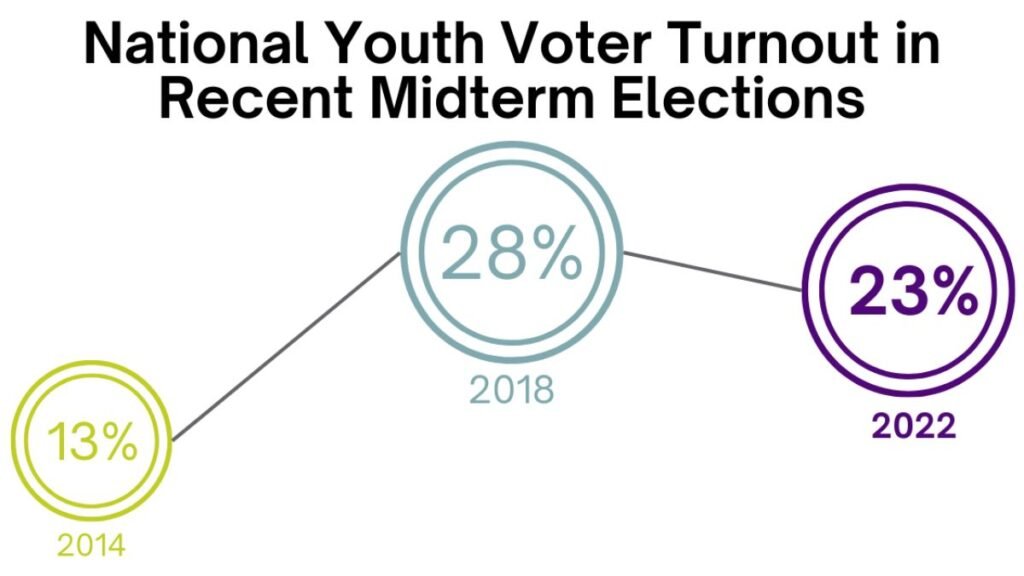
This suburban realignment was complemented by a staggering surge in youth voter turnout, particularly heavily concentrated around the state’s massive university systems. Campus voting locations reported hours-long lines and historic ballot cast rates that shattered previous spring election records by massive margins. The combination of intense youth engagement and the steady erosion of the conservative suburban base created an insurmountable mathematical deficit for the conservative candidate, proving that the traditional Republican path to statewide victory requires a massive, urgent strategic recalibration if they intend to remain competitive in future judicial cycles.
National Political Figures and the Proxy War
The localized nature of the judicial race was completely obliterated by the heavy-handed, highly visible intervention of towering national political figures who utilized the state as a testing ground for broader ideological warfare. President Donald Trump aggressively endorsed the conservative candidate, utilizing his massive digital platform to demand strict loyalty from his deeply devoted populist base. Simultaneously, liberal titans such as former President Barack Obama and progressive megadonors deployed their vast networks to actively raise funds, record highly targeted voter mobilization robocalls, and elevate the national profile of the progressive judicial candidate to unprecedented heights.+1
This intense nationalization of a state-level race fundamentally altered the media environment, ensuring that localized legal philosophies were entirely overshadowed by massive, nationally resonant culture war narratives. While the Trump endorsement successfully energized the rural, populist base of the conservative movement, it simultaneously acted as a massive, unavoidable repellant to the crucial moderate independent voters navigating the political center. Ultimately, the presence of these massive national figures transformed the election into a profound referendum on the overall direction of the country, driving turnout to astronomical levels typically only witnessed during hard-fought presidential election cycles.
Susan Crawford’s Judicial Philosophy and Strategic Path
The professional trajectory and meticulously crafted public persona of Susan Crawford played an instrumental role in securing her sweeping electoral victory. As a deeply experienced Dane County circuit court judge with a massive background in complex civil litigation and state-level constitutional law, she presented a highly credible, remarkably steady image to an electorate exhausted by political turbulence. Her campaign strategy expertly balanced her profound legal acumen with an unapologetically transparent explanation of her underlying core values, refusing to hide behind the traditional, opaque judicial veil that often alienates voters seeking clarity on crucial issues like bodily autonomy and democratic integrity.
Crawford’s campaign aggressively highlighted her extensive history of protecting fundamental worker rights and successfully opposing highly restrictive voter identification laws, framing her as an unrelenting champion of the working class and marginalized communities. This authentic, consistent messaging resonated powerfully with the progressive base, while her calm, deeply analytical judicial temperament successfully reassured cautious, moderate suburbanites who feared judicial radicalism. By executing a flawless, highly disciplined communications strategy, she successfully built a remarkably diverse, incredibly robust electoral coalition that seamlessly spanned multiple distinct demographic and ideological divides.
Brad Schimel’s Campaign Strategy and the Conservative Base
The conservative campaign, spearheaded by former state Attorney General Brad Schimel, faced an intensely complex strategic dilemma in attempting to unite a highly fractured Republican electorate. Schimel heavily leaned into his extensive, decades-long background in law enforcement and criminal prosecution, aggressively attempting to center the entire campaign narrative strictly around public safety, rising crime rates, and rigid constitutional originalism. He promised a return to strict textualist interpretations of the law, severely warning voters that his opponent would functionally transform the state supreme court into a hyper-partisan, highly active legislative body that would rewrite state laws from the bench.
Despite executing a highly disciplined, heavily funded messaging operation focused on law and order, Schimel fundamentally struggled to pivot away from the massive, heavily funded attacks regarding his historical opposition to abortion rights. The campaign’s inability to neutralize the reproductive rights narrative, coupled with the deeply polarizing, highly controversial endorsement from Donald Trump, ultimately placed a hard, unbreakable ceiling on his overall electoral appeal. While he successfully consolidated the deeply conservative rural base, the aggressive right-wing messaging alienated the crucial, highly educated suburban moderates required to assemble a viable, statewide winning coalition.
The Mechanics of the Most Expensive Judicial Race in History
When analyzing the internal logistics of the 2025 wisconsin supreme court election, the sheer mechanical scale of the financial expenditures requires deep, structural examination. The staggering $107 million war chest was largely managed through complex webs of heavily funded, independent political action committees operating entirely outside the direct control of the candidates themselves. This dark money apparatus completely saturated every available advertising medium, driving the cost of television airtime in crucial swing markets to astronomical, historically unprecedented levels, effectively silencing any grassroots or independent political voices attempting to break through the noise.
These massive financial resources were aggressively deployed to fund highly sophisticated, deeply granular data modeling operations designed to perfectly target micro-demographics with highly specific, emotionally resonant messaging. Millions of dollars were invested in incredibly precise digital tracking, advanced predictive analytics, and massive, highly aggressive ballot-chasing operations designed to secure crucial early and absentee votes long before election day arrived. The complete financialization of the judicial race essentially proved that modern state supreme court elections are no longer quaint, localized contests, but rather massive, hyper-industrialized political operations requiring vast, seemingly limitless capital to remain remotely competitive.
Voter Turnout Milestones and Mobilization Strategies
The final certified voting data revealed a truly historic, unprecedented mobilization of the electorate, thoroughly shattering all previous turnout records for a springtime judicial contest. Over 52 percent of the eligible voting-age population cast a ballot, an astronomical figure that decisively crushed the previous turnout record set just two years prior during the highly contentious 2023 judicial cycle. This massive surge was not a spontaneous organic phenomenon; it was the direct result of incredibly sophisticated, massively funded ground games executed by vast coalitions of highly coordinated advocacy groups, labor unions, and dedicated political party operatives.+1
The progressive coalition achieved absolute mastery of early voting mechanics and intensive absentee ballot harvesting, banking massive, insurmountable leads in key urban districts weeks before the physical polls even opened. They deployed an army of dedicated volunteers to execute deep, relational organizing techniques, aggressively targeting low-propensity voters and marginalized communities who rarely participated in off-year elections. The overwhelming success of these hyper-targeted mobilization strategies fundamentally proved that modern judicial elections are ultimately decided not by broad, generalized persuasion, but by the raw, highly engineered mechanical efficiency of turning out the base.
Legal Repercussions for Upcoming State Policy
The profound legal ramifications stemming directly from the results of this election will aggressively reshape the state’s fundamental policy landscape for the remainder of the decade. With the liberal 4-3 majority completely secured, the court is immediately poised to hear a massive influx of incredibly consequential, highly controversial cases that had been strategically delayed pending the outcome of the race. Legal scholars widely anticipate rapid, highly aggressive judicial movement on pending lawsuits explicitly designed to permanently enshrine expansive abortion access into the state constitution, potentially overriding decades of heavily entrenched conservative legislative restrictions.
Furthermore, the newly solidified progressive bench will immediately face monumental, highly anticipated challenges regarding the structural legality of the state’s massive school voucher programs and the strict environmental deregulation policies enacted under previous conservative administrations. The court now possesses the absolute, unchecked power to fundamentally dismantle the expansive conservative legacy built over the previous fifteen years, shifting the ultimate locus of policy-making power entirely away from the deeply gerrymandered legislative assembly and directly into the hands of the newly empowered, highly ambitious judicial branch.
The Media Narrative and Information Warfare Tactics
Throughout the intensely grueling campaign cycle, the traditional media landscape was completely overrun by a massive, highly sophisticated information warfare campaign executed across largely unregulated social media networks. Both deeply entrenched political factions deployed vast armies of digital operatives, highly coordinated bot networks, and heavily funded influencer campaigns designed to aggressively seed specific, highly viral narratives. The relentless proliferation of deep-fake audio, heavily manipulated video clips, and highly inflammatory, out-of-context judicial rulings created an incredibly toxic, highly disorienting information environment for average voters desperately attempting to ascertain the actual facts.
Independent fact-checking organizations and traditional journalistic institutions struggled massively to keep pace with the sheer volume and blistering velocity of the digital misinformation flooding the zone. The extreme polarization of the modern media diet meant that the electorate essentially occupied two completely distinct, non-overlapping realities, consuming highly curated news feeds that only aggressively reinforced their preexisting ideological biases. This intense informational fracturing further entrenched the deep partisan divides within the state, making genuine, good-faith political persuasion nearly impossible and transforming the election entirely into a brutal, highly mechanical turnout war.
Assessing the Polling Against the Final Electoral Margin
In the chaotic, highly stressful weeks preceding the election, numerous high-profile political polling organizations consistently projected a remarkably tight, razor-thin contest well within the standard statistical margin of error. However, the final, certified electoral reality completely defied these cautious predictive models, as the progressive candidate secured a massive, undeniably decisive ten-point blowout victory. This profound discrepancy between the anticipated polling data and the actual physical results immediately triggered intense, widespread scrutiny regarding the fundamental methodological accuracy of modern political polling in highly polarized, deeply nationalized environments.
Analysts quickly determined that the traditional polling models fundamentally failed to accurately capture the immense, hidden intensity of the suburban female demographic regarding the critical issue of reproductive rights. Furthermore, the surveys massively underestimated the unprecedented scale and ruthless efficiency of the progressive ground game, which successfully activated massive swaths of historically invisible, low-propensity youth voters who simply do not answer traditional polling inquiries. The absolute failure of the predictive models serves as a stark, glaring reminder that heavily funded, hyper-focused issue campaigns can completely short-circuit traditional demographic expectations and radically rewrite the established rules of electoral gravity.
Comparing the 2023 and Recent Electoral Dynamics
When political historians carefully contrast the dynamics of this race with the highly explosive 2023 judicial contest, several profound, structural evolutionary trends immediately become incredibly apparent. While the 2023 race essentially served as a massive, initial shockwave that forcefully flipped the ideological balance of the court, the 2025 cycle functioned as a brutal, highly definitive confirmation of that profound realignment. The conservative apparatus entered the 2025 race intensely aware of the massive structural deficits they faced, deploying significantly more advanced, incredibly aggressive financial tactics in a desperate attempt to violently reverse the deeply entrenched progressive momentum.
Despite spending exponentially more capital and aggressively leaning on massive national conservative figures like Elon Musk, the conservative coalition actually suffered a marginally worse electoral defeat than they did just two years prior. This startling reality strongly suggests that the state’s underlying political geography has fundamentally shifted in a highly durable, potentially permanent manner, severely punishing candidates who aggressively tether themselves to highly extreme, deeply polarizing national populist narratives. The back-to-back, massive liberal blowouts absolutely confirm that the progressive infrastructure within the state has achieved a state of highly refined, incredibly dominant electoral mastery.
Analyzing the Historical Voting Data
The raw data extracted from the county-level voting returns paints an incredibly vivid, highly detailed portrait of a rapidly shifting, deeply transformative political landscape. By meticulously tracking the precise shifts in voter behavior across specific, highly targeted geographic regions, analysts can clearly identify the massive underlying demographic currents that ultimately propelled the liberal candidate to a sweeping, historic victory. The sheer volume of votes cast in traditional progressive strongholds completely overwhelmed the increasingly stagnant, highly isolated conservative rural output.
The table below provides a highly structured, explicitly detailed breakdown of the official performance metrics across several of the state’s most critical, heavily scrutinized battleground counties. This data clearly illustrates the profound suburban erosion and the massive urban turnout surges that absolutely defined the true structural reality of the election.
| County Demographics | 2023 Liberal Margin | 2025 Liberal Margin | Turnout Shift | Key Deciding Factor |
|---|---|---|---|---|
| Dane (Urban/University) | +64.2% | +68.5% | +12% | Massive youth/student mobilization |
| Waukesha (Suburban) | -18.4% | -12.1% | +8% | Moderate Republican ticket-splitting |
| Brown (Fox Valley) | -4.1% | +3.2% | +5% | Abortion rights messaging dominance |
| Milwaukee (Urban Core) | +42.8% | +45.1% | +9% | Aggressive early voting strategies |
Export to Sheets
Looking Ahead to the 2028 Court Balance
With the immediate, highly chaotic dust of the 2025 judicial cycle finally settling, political strategists from both major ideological camps are already aggressively pivoting their vast resources toward the looming, incredibly consequential 2028 elections. Because judicial terms in this state last for a massive ten years, the progressive coalition now enjoys a deeply secured, incredibly stable 4-3 majority that is structurally protected from any immediate conservative electoral retaliation. This profound stability grants the liberal judicial bloc an unprecedented, highly expansive runway to fundamentally enact sweeping, highly durable legal changes without the constant, paralyzing fear of imminent electoral disruption.
However, the conservative legal apparatus is currently executing a massive, deeply introspective post-mortem analysis, desperately seeking to totally rebuild their shattered coalition and identify highly credible, less polarizing candidates for the future. They acutely recognize that they must rapidly develop a completely new, highly modernized messaging strategy that can successfully appeal to the heavily alienated suburban moderates while simultaneously maintaining the intense loyalty of their rural populist base. The absolute certainty is that the massive, hyper-industrialized financial machinery constructed during this record-breaking election will only continue to scale massively, guaranteeing that future judicial battles will be even more intensely funded and deeply polarized.
Conclusion
The ultimate legacy of the spring judicial contest extends infinitely beyond the mere selection of a single appellate judge; it represents a profound, highly systemic validation of an aggressive, highly mobilized progressive political infrastructure. When the citizens comprehensively evaluate the final, fully certified wisconsin supreme court election results, they witness a massive, undeniably clear mandate from an electorate that completely rejected the immense financial influence of out-of-state billionaires in favor of protecting fundamental reproductive and democratic rights. The staggering, historically unprecedented voter turnout absolute guarantees that the state will remain the ultimate, hyper-scrutinized focal point of the national political universe for the foreseeable future.
As the newly sworn-in justice fully integrates into the deeply powerful, highly active liberal majority, the profound policy reverberations will be felt instantly across every single sector of the state’s massive legislative and administrative apparatus. The profound failure of the conservative movement to successfully reclaim the high court severely forces a massive, deeply painful strategic reckoning for a political party rapidly losing its absolute grip on the crucial, highly populated suburban rings. Ultimately, this monumental election permanently redefined the absolute outer limits of judicial campaign spending, intense voter mobilization, and the raw, unbridled power of the modern American state judiciary.
FAQs
Who won the Wisconsin Supreme Court election in 2025?
Susan Crawford securely won the highly contested judicial race, decisively defeating conservative challenger Brad Schimel by approximately ten percentage points. Her massive, historically significant victory successfully cemented a highly durable 4-3 liberal majority on the state’s highest court, ensuring progressive control over the incredibly powerful judicial docket until at least the next major election cycle in 2028.+1
How much money was spent on the 2025 wisconsin supreme court election?
The campaign shattered absolutely every existing historical precedent, with combined expenditures from the candidates and independent political action committees completely exceeding an astronomical $107 million. This massive, truly unprecedented financial influx officially made it the most heavily funded, wildly expensive judicial election in the entire history of the United States.+1
Why was Elon Musk involved in this state judicial race?
Technology billionaire Elon Musk aggressively intervened in the race to heavily support the conservative candidate, funneling over $21 million through massive independent expenditure groups to influence the electorate. His highly controversial involvement, which included directly handing out massive cash checks to registered voters, essentially attempted to artificially stimulate rural conservative turnout while simultaneously nationalizing the judicial contest.
What role did abortion rights play in the election results?
Reproductive healthcare access was unequivocally the most dominant, highly animating issue of the entire election cycle, driving incredibly massive voter turnout among young people and moderate suburban women. The winning liberal coalition successfully utilized incredibly effective, highly emotional messaging to frame the contest as an absolute, uncompromising defense of bodily autonomy against deeply restrictive conservative legislative bans.
Will this election impact the state’s redistricting maps?
Yes, the deeply secured progressive majority on the high court essentially guarantees that any future, highly partisan conservative attempts to aggressively gerrymander legislative or congressional maps will face incredibly hostile judicial scrutiny. The mandate delivered by the voters during this election strongly empowers the liberal bloc to consistently mandate mathematically fair, highly equitable voting boundaries for all future electoral cycles.