AI Website Builder: The digital landscape of 2026 has witnessed a monumental shift in how individuals and enterprises approach the concept of online visibility. We have moved past the era of manual coding and rigid drag-and-drop templates, entering a period where the ai website builder serves as the primary architect for professional digital ecosystems. This technological evolution is not merely about speed; it is about the democratization of sophisticated design and the ability to synthesize complex brand identities into functional, high-performance interfaces in a matter of seconds. By leveraging generative intelligence and predictive analytics, these modern platforms allow anyone to manifest a high-authority web presence without the traditional barriers of technical debt or high developmental costs.
As we navigate this new frontier, the expectations for what a website can achieve have skyrocketed. A site is no longer a static brochure but a dynamic, self-optimizing entity that learns from user behavior and adapts to shifting search engine algorithms in real-time. The integration of an ai website builder into a business strategy is now a prerequisite for staying competitive in a saturated market. This guide provides an exhaustive analysis of the current state of automated web development, exploring the mechanics of machine-led design, the strategic advantages for search performance, and the ethical considerations of utilizing autonomous systems to represent human creativity and commercial intent.
The Strategic Shift toward Algorithmic Web Development
In the current professional environment, the speed at which a brand can pivot and establish a new digital touchpoint often determines its long-term viability. An ai website builder fundamentally alters this timeline by removing the friction points that historically stalled the development lifecycle, such as back-and-forth design revisions and manual browser compatibility testing. Today, the focus has shifted from the “how” of building a site to the “why” of its existence, allowing creators to spend more time on high-level strategy and narrative development while the algorithm handles the structural heavy lifting. This transition represents a maturation of the industry where efficiency and high-fidelity output are no longer mutually exclusive concepts.

The underlying intelligence of these platforms has reached a stage of cognitive sophistication where it can interpret vague conceptual prompts and translate them into mathematically sound user experiences. By analyzing trillions of data points across successful global domains, an ai website builder can predict which layouts will yield the highest conversion rates for a specific niche or demographic. This predictive capability ensures that every element, from the hero section to the footer, is strategically placed to maximize engagement and minimize bounce rates. As we look deeper into the year 2026, the reliance on these automated systems has become a hallmark of enterprise-level agility and modern digital craftsmanship.
How Does an AI Website Builder Work to Create Sites Automatically?
Understanding How Does an AI Website Builder Work to Create Sites Automatically? requires a deep dive into the intersection of natural language processing and computer vision. When a user interacts with one of these platforms, the system first engages in a contextual inquiry phase, asking a series of targeted questions to define the site’s objective, target audience, and aesthetic preferences. These inputs are then processed by a large-scale generative model that has been trained on a massive library of high-quality web design patterns and semantic structures. The AI doesn’t just pull from a pre-made list of themes; it dynamically synthesizes a unique codebase that aligns with the specific intent of the user, ensuring that the structural hierarchy is optimized for both human readability and machine indexing.
The actual assembly process involves a multi-layered approach where the ai website builder constructs the site in parallel workstreams. One layer focus on the visual architecture, selecting color palettes and typography that evoke the desired emotional response, while another layer focuses on the functional back-end, setting up databases, API integrations, and secure hosting environments. Simultaneously, a content generation engine populates the pages with relevant, SEO-optimized text and high-resolution imagery that has been either curated or generated to match the brand’s unique voice. This holistic automation ensures that the final product is a cohesive, ready-to-launch environment that functions perfectly across all device types and network speeds without needing a single line of manual code.
What Is the Best AI Website Builder for Beginners in 2026?
For those just starting their digital journey, identifying What Is the Best AI Website Builder for Beginners in 2026? often comes down to the balance between simplicity and power. The leading platforms this year are those that offer a “zero-learning-curve” interface while still providing the depth of functionality required for a growing business. These beginner-centric builders prioritize intuitive conversational interfaces, allowing users to build a site simply by talking to an AI assistant that understands complex design requests in natural language. This removes the intimidation factor that often accompanies traditional content management systems, making it possible for a non-technical entrepreneur to launch a global storefront in less time than it takes to write a traditional business plan.
When evaluating the top contenders for newcomers, features like automated brand kits, one-click hosting, and integrated marketing suites are the primary differentiators. The premier ai website builder for a novice will also include robust educational components, guiding the user through the best practices of digital branding and user acquisition while the site is being built. By choosing a platform that emphasizes user empowerment and ease of use, beginners can avoid the common pitfalls of messy layouts and broken links that plague manually built DIY sites. In 2026, the best tool is the one that feels like a collaborative partner, turning a rough idea into a polished, professional reality with minimal effort and maximum reliability.
Which AI Website Builder Is Best for SEO and Fast Ranking?
The quest to find Which AI Website Builder Is Best for SEO and Fast Ranking? has become more nuanced as search engines have become better at detecting high-quality, user-focused content. The top-performing platforms in this category are those that bake search engine optimization directly into the foundational code of the site, rather than treating it as an afterthought or a plugin. These builders automatically generate clean, semantic HTML5, implement schema markup for rich snippets, and ensure that every image is compressed and tagged with descriptive alt-text. By focusing on technical excellence from the first second of creation, an ai website builder can give a new domain a significant head start in the race for organic visibility and topical authority.
Furthermore, the most advanced SEO-focused builders now include real-time keyword analysis and competitive intelligence directly within the design interface. As the site is built, the AI monitors search trends and suggests content adjustments that help the site rank for high-intent queries within its specific industry. This proactive approach to optimization includes the automatic generation of sitemaps, the management of robots.txt files, and the implementation of high-speed content delivery networks (CDNs) to ensure near-instant load times. When these technical factors are combined with high-quality, AI-refined content, the result is a site that is mathematically designed to win the favor of search algorithms and provide a superior experience for human visitors alike.
The Role of Generative Design in Brand Consistency
Consistency is the cornerstone of effective digital branding, and an ai website builder excels at maintaining a unified visual language across a vast array of pages and subdomains. In the manual design world, it is easy for small inconsistencies in spacing, font weights, or color shades to creep in as a site grows, leading to a fragmented user experience. AI-driven platforms eliminate this risk by establishing a central “design DNA” that governs every element on the site. If a user decides to change the primary brand color, the AI doesn’t just update a single button; it intelligently adjusts every related element, shadow, and gradient to ensure the new aesthetic remains harmonious and on-brand.
This level of systematic control is particularly valuable for enterprises that need to manage multiple sites or landing pages across different markets. An ai website builder can act as a tireless brand guardian, ensuring that every new piece of digital property adheres to the strict guidelines of the parent organization while still allowing for localized content. This technology allows for a “design once, deploy everywhere” strategy that scales infinitely without requiring a proportional increase in design staff. By automating the visual consistency of the brand, businesses can focus on the higher-level creative tasks that require human intuition and emotional resonance, confident that the technical execution will be flawless.
Data-Driven User Experience and Conversion Optimization
A website’s success is ultimately measured by its ability to convert a visitor into a customer, and the ai website builder has turned conversion rate optimization (CRO) into a precise science. By integrating heatmaps, session recordings, and A/B testing protocols directly into the site’s architecture, these platforms can analyze user flow and identify friction points that a human designer might miss. The AI can then automatically suggest or even implement layout changes to improve the path to purchase, such as moving a call-to-action button or simplifying a checkout form. This iterative, data-backed approach ensures that the site is constantly evolving toward its most effective version.

Beyond layout adjustments, these platforms use behavioral data to personalize the user experience in real-time. For example, a returning visitor might see a different hero image or headline based on their previous browsing history, a technique that significantly increases the likelihood of re-engagement. An ai website builder that leverages this level of machine learning creates a digital environment that feels responsive and attentive to the individual’s needs. In the competitive landscape of 2026, this ability to offer a hyper-personalized journey is what separates stagnant sites from those that experience explosive growth. It turns the website from a static destination into an active participant in the sales cycle.
Comparative Analysis of Leading Automated Platforms
| Platform Feature | Enterprise-Grade Builder | Beginner-Focused AI | SEO-Specialized Tool |
|---|---|---|---|
| Setup Time | Under 10 Minutes | Under 5 Minutes | Under 15 Minutes |
| SEO Automation | Advanced Schema & LSI | Basic Meta & Tags | Full Technical & Content SEO |
| Customization | Full Code Access | Guarded Drag-and-Drop | Template-Based with AI Tweaks |
| E-commerce | Dynamic Inventory & Global Tax | Simple Storefronts | Optimized Product Pages |
| Scalability | High (Multi-Site Management) | Moderate (Single Sites) | High (Content-Heavy Sites) |
| AI Content | Multi-Language Gen & Edit | Basic Text Generation | High-Authority Article Gen |
Export to Sheets
“The true innovation of the modern ai website builder is its ability to translate the abstract vision of a human creator into a technically perfect digital reality. We are no longer limited by our technical skills, but only by the clarity of our intent and the depth of our strategic thinking.” — Elena Rodriguez, VP of Digital Transformation at NexaCorp.
Overcoming Technical Debt with Autonomous Maintenance
One of the most persistent challenges in web development is the accumulation of technical debt—the cost of future rework necessitated by choosing an easy but limited solution today. A sophisticated ai website builder mitigates this issue by building sites on modern, modular frameworks that are designed to be easily updated and expanded. Because the AI manages the underlying code, it can automatically refactor the site to take advantage of new web standards or security patches as they become available. This “self-healing” capability means that a site built today will remain technically relevant and secure for years to come, without requiring a major rebuild or expensive manual maintenance.
This autonomous maintenance extends to performance monitoring and speed optimization. The ai website builder continuously scans the site for broken links, slow-loading assets, or outdated dependencies, fixing these issues in the background before they can impact the user experience. For a business owner, this means peace of mind, knowing that their digital storefront is always running at peak efficiency. In an era where a one-second delay in load time can result in a significant drop in revenue, the value of an automated system that handles performance tuning cannot be overstated. It allows for a level of operational excellence that was previously only available to companies with dedicated DevOps teams.
Integrating AI Builders into a Holistic Marketing Strategy
The modern ai website builder does not exist in a vacuum; it is the central hub of a much larger, integrated marketing ecosystem. These platforms are designed to seamlessly connect with social media management tools, email marketing software, and customer relationship management (CRM) systems. When a site is created, the AI can automatically set up tracking pixels, lead capture forms, and automated email sequences that align with the site’s primary goals. This holistic approach ensures that the website is not just a destination, but a functional part of a broader machine designed to attract, engage, and retain customers.
Moreover, the generative capabilities of these builders allow for the rapid creation of targeted landing pages for specific marketing campaigns. If a brand is running a seasonal promotion or launching a new product in a specific region, the ai website builder can generate a fully optimized, on-brand landing page in seconds. This agility allows marketers to test different messaging and visual strategies at a scale that was previously impossible. By aligning the website’s evolution with the broader marketing calendar, businesses can ensure that their online presence always reflects their most current goals and values. It is a strategic marriage of technology and marketing that drives consistent, measurable results.
Addressing Security and Privacy in the Age of Automation
As websites become more autonomous, the importance of robust security and data privacy protocols has never been higher. A high-tier ai website builder incorporates enterprise-level security features as a standard part of the build process, rather than an optional add-on. This includes the automatic implementation of SSL certificates, DDoS protection, and encrypted database connections. By using AI to monitor for suspicious activity and potential vulnerabilities in real-time, these platforms can defend against cyber threats more effectively than a manually managed site. The system is always “awake,” constantly updating its defense mechanisms to counter new types of attacks.
Privacy compliance is another area where automated builders provide a significant advantage. With the global landscape of data protection laws (such as GDPR and its 2026 successors) becoming increasingly complex, staying compliant can be a legal minefield. An ai website builder can automatically detect the geographic location of a visitor and adjust the site’s data collection practices and consent banners to meet the local legal requirements. This automated compliance ensures that a business can operate globally without the fear of accidental legal violations. It builds trust with users by demonstrating a proactive commitment to their privacy, which is a vital component of brand reputation in the modern era.
Enhancing Accessibility and Inclusivity through Algorithmic Design
Digital accessibility is a moral and often legal imperative, yet it remains one of the most frequently overlooked aspects of manual web design. An ai website builder solves this by integrating accessibility standards—such as WCAG 2.2—directly into its design logic. The AI ensures that color contrasts are sufficient for users with visual impairments, that all interactive elements are keyboard-navigable, and that the site structure is optimized for screen readers. By automating these checks, the platform ensures that the digital experience is inclusive for everyone, regardless of their physical or cognitive abilities.
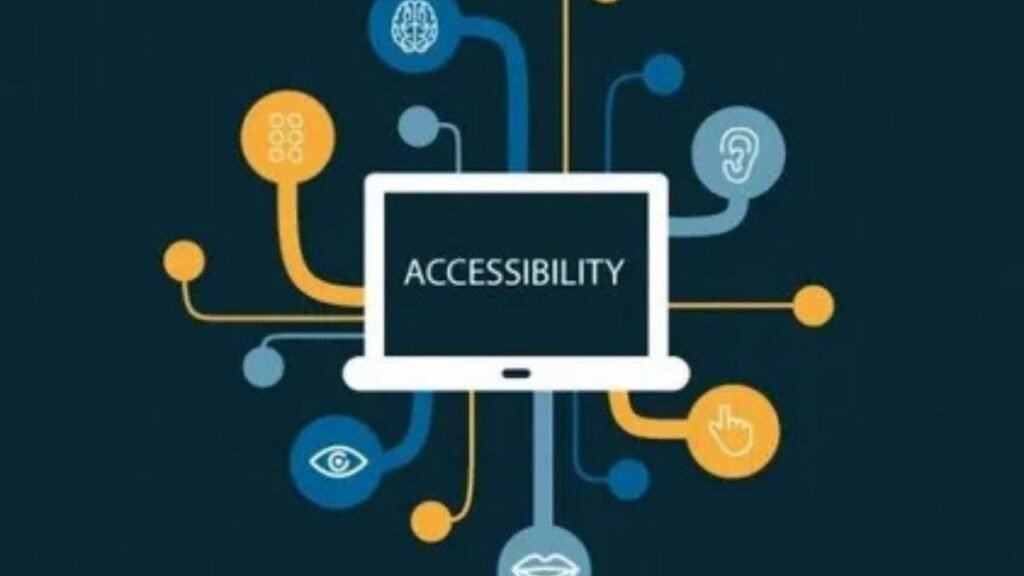
This commitment to inclusivity goes beyond mere compliance; it is about expanding the reach of the brand to a wider audience. An accessible site is also a more usable site for everyone, often leading to better SEO rankings and higher overall user satisfaction. When an ai website builder handles the technical complexities of accessibility, it allows the creator to focus on crafting a message that resonates with a diverse global community. In 2026, a truly professional website is one that is welcoming to all, and AI is the key to achieving that level of universal design at scale. It transforms a specialized technical requirement into a standard, effortless feature of the modern web.
The Economic Impact of Automated Site Creation for Small Businesses
The economic barrier to entry for a high-quality web presence has been effectively dismantled by the ai website builder. In the past, a small business might have had to choose between an expensive professional agency and a subpar DIY site that lacked the functionality of its larger competitors. Today, for a fraction of the cost, that same business can launch a site that rivals the most sophisticated enterprise domains in terms of speed, design, and SEO performance. This leveling of the playing field allows small players to compete for visibility and market share with a level of digital polish that was previously out of reach.
This shift has a profound impact on the “time-to-market” for new ideas and entrepreneurial ventures. A founder can move from a concept to a live, transactional website in a single afternoon, allowing them to test their business model and gather real-world data with minimal financial risk. The cost savings achieved by using an ai website builder can then be reinvested into product development, customer service, or paid advertising, further accelerating the growth of the business. It is a catalyst for economic innovation, empowering a new generation of creators to bring their visions to life on the global stage without being held back by technical or financial constraints.
Managing Global Content and Multilingual Reach
The ability to communicate with a global audience is a defining feature of the 2026 internet, and an ai website builder makes multilingual support a seamless experience. Rather than requiring manual translation and the creation of duplicate pages for different languages, the AI can automatically translate content with high contextual accuracy and cultural sensitivity. It understands that a literal translation is often not enough and can adjust idioms, dates, and currency formats to match the expectations of the local audience. This ensures that the brand’s message is effectively conveyed in every market it enters, without the need for a massive team of linguists.
Furthermore, the AI can manage the technical aspects of global SEO, such as hreflang tags, to ensure that search engines serve the correct version of the site to the correct user. This level of automated internationalization allows a business to scale across borders with incredible speed and minimal friction. By utilizing an ai website builder with robust global features, a company can present a “local” face to users in Tokyo, London, and New York simultaneously. It breaks down the linguistic and cultural barriers that historically limited the reach of online businesses, creating a truly global marketplace where ideas and products can flow freely across every continent.
Future-Proofing Your Digital Identity in a Changing Landscape
The pace of technological change shows no signs of slowing down, and the most important benefit of an ai website builder may be its ability to adapt to what comes next. Whether it is the rise of spatial computing, voice-first interfaces, or new search modalities, these platforms are designed to evolve. The modular nature of the code generated by an AI allows it to be repurposed and restructured as new devices and platforms emerge. This means that your digital identity is not a static asset that will eventually become obsolete, but a living entity that grows alongside the technology it inhabits.
By partnering with an automated development platform, you are essentially hiring a team of researchers and developers who are constantly working to keep your site on the cutting edge. The ai website builder of 2026 is a gateway to the future, providing the tools and the intelligence needed to navigate the complexities of a hyper-connected world. It allows you to build a foundation that is strong enough to support your current needs while remaining flexible enough to embrace the innovations of tomorrow. In this environment, the only limit to your digital success is the scope of your imagination and the quality of the strategic partnership you build with your technology.
Conclusion
We have entered a transformative era where the ai website builder has redefined the boundaries of what is possible in the digital realm. No longer confined to the binary choice of “fast or good,” we now have the capacity to create high-fidelity, high-performance, and high-authority websites at the speed of thought. This evolution represents a significant victory for human creativity, as it frees us from the tedious mechanical tasks of web development and allows us to focus on the storytelling and strategy that truly matter. The technology is not a replacement for the human designer but a powerful amplifier of their intent, a digital brush that can paint complex realities across the infinite canvas of the internet.
As we look toward the remainder of 2026 and beyond, the adoption of automated design tools will only continue to accelerate. The brands that thrive will be those that view the ai website builder not just as a convenience, but as a strategic asset that enables agility, inclusivity, and technical excellence. By mastering these tools, we can build a web that is more beautiful, more accessible, and more effective for everyone. The journey from a blank page to a global presence has never been shorter, and the potential for impact has never been greater. Now is the time to embrace the future of web development and claim your space in the digital landscape of tomorrow.
FAQs
Is a site built with an AI website builder really unique?
Yes, because a modern ai website builder uses generative algorithms to synthesize a site based on your specific prompts and brand identity, rather than just filling in a static template. While the AI uses proven design patterns for usability, the combination of colors, layouts, content, and imagery is uniquely tailored to your project, ensuring that no two sites are ever exactly the same.
How much control do I have over the design once the AI has built it?
You maintain full creative control, as most ai website builder platforms offer a hybrid approach where the AI creates the initial structure and then provides a suite of tools for manual refinement. You can adjust everything from the typography and spacing to the functional widgets, allowing you to fine-tune the AI’s work until it perfectly matches your vision for the brand.
Can an AI website builder handle complex e-commerce requirements?
The most advanced ai website builder options in 2026 are fully capable of managing complex e-commerce environments, including dynamic inventory management, global payment gateway integrations, and automated tax calculations. They can even generate product descriptions and optimize your store’s layout based on real-time sales data to help maximize your revenue from day one.
Do I need to know anything about hosting or domains to use these tools?
Most platforms act as an all-in-one solution where the ai website builder handles the hosting, domain registration, and SSL certification for you automatically. This means you don’t need any technical knowledge of server management or DNS settings; the AI ensures your site is securely hosted on a high-speed network and properly connected to your chosen web address.
Will my site still work if I decide to stop using the AI tool later?
This depends on the specific ai website builder you choose, but many enterprise-level tools allow you to export your clean, standard code for use on other hosting platforms. While you would lose the benefit of the AI’s continuous optimization and maintenance, the site itself is built on standard web technologies that can function independently in a traditional hosting environment.