Presidential Records Act Executive Privilege 2026: The delicate balance of power within the American government often hinges on the control and disclosure of information. At the heart of this tension sits the dynamic relationship between statutory mandates and constitutional claims, specifically the interaction involving the presidential records act executive privilege frameworks.
For decades, the public’s right to an accurate historical record has vied with the President’s need for candid, confidential counsel. As we move deeper into the 2020s, high-profile legal disputes and a landmark 2026 Department of Justice opinion have thrust these once-technical administrative laws into the center of a national debate over accountability, transparency, and the very nature of executive authority.
The Legislative Foundation: The Presidential Records Act of 1978
The modern era of record-keeping began as a direct response to the constitutional crisis of the 1970s. Following the Watergate scandal and the subsequent dispute over President Richard Nixon’s secret tapes, Congress sought to codify the principle that presidential documents are public property. The presidential records act of 1978 fundamentally shifted the ownership of official records from the individual president to the United States government, establishing a rigorous process for the preservation and eventual public release of these materials.
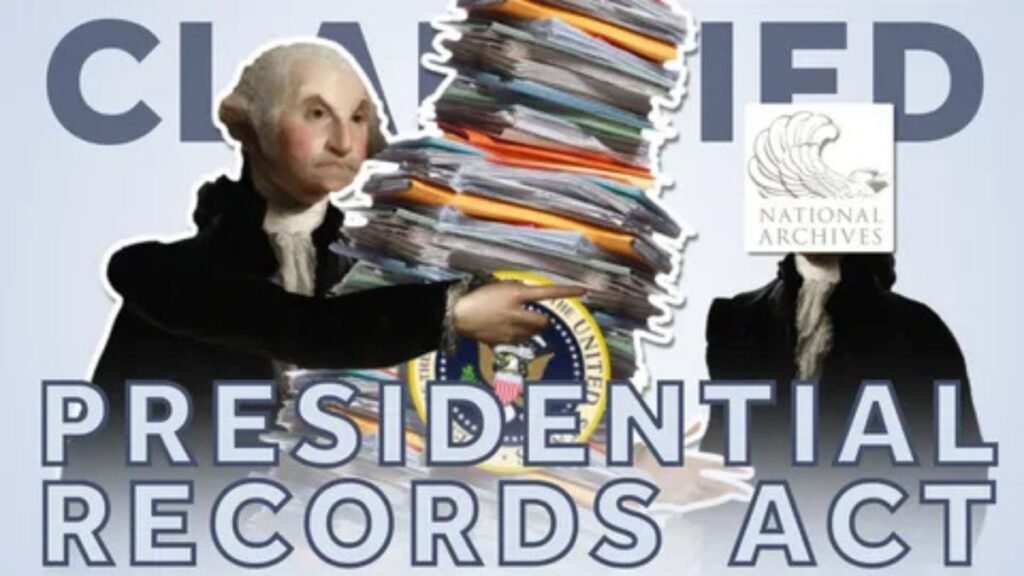
Before this legislation, outgoing presidents often treated their papers as personal property, frequently destroying or restricting access to them at their own discretion. The presidential records act ended this tradition by mandating that all records related to the constitutional, statutory, or ceremonial duties of the President be managed by the National Archives and Records Administration (NARA). This shift was intended to ensure that future generations, historians, and the legal system would have a permanent, unalterable account of the decisions made within the Oval Office.
Defining the Boundaries of Executive Privilege
While the presidential records act provides a statutory framework for transparency, executive privilege exists as a constitutionally derived doctrine that grants the President the authority to withhold certain confidential communications. This privilege is not an absolute shield but is based on the necessity of “candid, objective, and even blunt or harsh opinions” within the executive branch. Without the assurance of confidentiality, advisors might hesitate to provide the honest feedback required for effective governance, potentially weakening the office of the presidency.
The tension arises when the mandates of the presidential records act intersect with a President’s desire to maintain secrecy over sensitive deliberations. Courts have historically employed a balancing test, weighing the executive’s need for confidentiality against the public interest or the needs of a criminal investigation. This intersection creates a legal “collision course” where the legislative intent of the 1978 Act meets the inherent Article II powers of the presidency, often requiring the judicial branch to serve as the ultimate arbiter.
The Presidential Records Act Signal for Transparency
One of the most significant aspects of the law is its role in establishing a predictable rhythm for government accountability. Experts often describe the presidential records act signal as a clear message to the executive branch that their actions are being recorded for posterity. This “signal” serves a dual purpose: it encourages ethical behavior by ensuring a future public audit and provides a structured path for the release of information once a President has left office.
By mandating that most records become subject to Freedom of Information Act (FOIA) requests five years after an administration ends, the Act creates a cooling-off period. During this time, the immediate political sensitivity of the records diminishes, allowing for a more objective historical analysis. The presidential records act signal thus functions as a structural safeguard, reinforcing the idea that the President is a temporary steward of the office, not a permanent owner of the information generated during their tenure.
2026 Legal Developments and Constitutional Challenges
The legal landscape surrounding these issues reached a fever pitch in April 2026, when the Department of Justice’s Office of Legal Counsel (OLC) issued a controversial memorandum. This opinion argued that the presidential records act of 1978 is unconstitutional because it allegedly encroaches upon the President’s inherent Article II authority. The OLC’s position asserts that Congress lacks the power to expropriate the papers of the Chief Executive, drawing a parallel to how Congress cannot seize the internal working papers of Supreme Court Justices.
This 2026 opinion has sparked intense debate among legal scholars and civil society organizations. Critics argue that declaring the presidential records act unconstitutional effectively erases decades of transparency and could allow for the unmonitored destruction of evidence related to government operations. Proponents, however, view it as a necessary correction to decades of legislative overreach that they believe has weakened the independence and autonomy of the executive branch.
Strategic Comparison: Preservation vs. Privilege
To understand the practical application of these concepts, it is helpful to compare the statutory requirements for record-keeping with the criteria used to justify executive privilege. While the presidential records act focuses on the physical custody and legal ownership of documents, executive privilege focuses on the content and the context of the communication.
The following table outlines the key differences in how these two frameworks operate within the federal government.
The Role of the National Archives (NARA)
The National Archives and Records Administration serves as the vital intermediary in the presidential records act executive privilege tug-of-war. When an administration ends, NARA assumes legal and physical custody of millions of pages of documents, ranging from mundane schedules to high-level policy memos. Their role is to be a neutral guardian, ensuring that records are not only preserved but also reviewed for classified information or valid privilege claims before being released to the public.
However, NARA’s independence has occasionally come under fire. During the 2026 debates, some political factions questioned whether the agency should have the power to “gatekeep” presidential history. Despite these pressures, the career archivists at NARA maintain that their mission is strictly non-partisan: to ensure that the record of the American people’s government remains intact, regardless of the political climate or the specific assertions of privilege made by current or former occupants of the White House.
Executive Privilege in Judicial and Legislative Inquiries
The most frequent point of friction for the presidential records act occurs during congressional investigations. When a House or Senate committee subpoenas records from a current or former President, the executive branch often responds with a claim of privilege. Courts must then decide if the legislative “power of inquiry” outweighs the President’s need for secrecy. These cases are rarely settled quickly, often winding through appellate courts for years.

This balancing act was famously tested in United States v. Nixon, and more recently in cases involving the 2021 Capitol riot records. In those instances, the Supreme Court largely affirmed that the presidential records act provides a valid mechanism for the transfer of records, even when a former President attempts to assert privilege over them. The 2026 OLC opinion represents a significant attempt to reverse this trend and bolster the President’s ability to withhold documents permanently.
The Evolution of “Personal” vs. “Presidential” Records
A recurring loophole in the presidential records act executive privilege debate is the classification of “personal records.” The Act defines personal records as materials of a purely private or nonpublic character that do not relate to the President’s official duties. If a President can successfully argue that a document is “personal,” they can retain it as private property, bypassing both NARA custody and public disclosure requirements.
This distinction has led to several high-profile disputes, most notably involving digital communications and handwritten notes. In the age of social media and instant messaging, the line between an official “presidential record” and a “personal” message has become increasingly blurred. The presidential records act mandates that officials use official accounts for government business, but the enforcement of these rules often relies on the self-reporting and integrity of the individual officeholders.
Transparency and Public Trust
Ultimately, the debate over the presidential records act is about more than just legal definitions; it is about the health of the democratic process. When the public perceives that a President is using executive privilege to hide misconduct or evade accountability, trust in the government erodes. Conversely, when the presidential records act signal is respected, it fosters a culture of transparency that can help mend partisan divides by providing an objective, factual basis for historical debate.
As technological advancements make it easier to generate and store massive amounts of data, the systems used to manage these records must adapt. The challenge for the coming years will be to modernize the presidential records act of 1978 to account for AI-generated content, encrypted communications, and decentralized government work, all while respecting the constitutional protections afforded to the executive branch.
Conclusion
The interplay between the presidential records act executive privilege remains one of the most complex and critical areas of constitutional law. While the 1978 Act was born out of a desire to prevent future abuses of power, the inherent needs of the presidency for confidentiality ensure that the debate will never be fully settled. As the 2026 OLC opinion moves toward potential judicial review.
The American people are reminded that the control of history is just as significant as the control of policy. Preserving the integrity of presidential records is not merely an archival task; it is a fundamental act of democratic preservation that ensures no leader is beyond the reach of the law or the judgment of history.
FAQs
What is the purpose of the Presidential Records Act of 1978?
The primary purpose of the presidential records act of 1978 is to establish that all official records created by a President and their staff are the property of the U.S. government. It provides a legal framework for the preservation of these records and mandates their eventual transfer to the National Archives (NARA) for public access, ensuring that the history of an administration is preserved for the American people.
How does executive privilege affect the Presidential Records Act?
Executive privilege can create a temporary barrier to the transparency intended by the presidential records act. While the Act says records belong to the public, a President can assert executive privilege to withhold specific sensitive documents from Congress or the courts. However, this privilege is not absolute and is often subject to judicial review to determine if the need for secrecy outweighs the need for disclosure.
What was the impact of the 2026 OLC opinion on presidential records?
The 2026 OLC opinion sent a shockwave through the legal community by declaring the presidential records act unconstitutional. It argued that Congress does not have the authority to regulate or seize the President’s records, asserting that these materials are essentially the private property of the executive. If upheld by the courts, this could significantly reduce government transparency and change how future administrations manage their internal communications.
What does the “presidential records act signal” mean in practice?
The presidential records act signal refers to the deterrent effect and the standard of transparency the law creates. By signaling that all official actions will eventually be made public, the law encourages Presidents and their advisors to act with the knowledge that their decisions will be scrutinized by history. It acts as a structural reminder that the executive branch is accountable to the law and the electorate.
When do presidential records become available to the public?
Under the presidential records act, the public can begin requesting records via the Freedom of Information Act (FOIA) five years after a President leaves office. However, a President can choose to restrict certain categories of sensitive information—such as confidential legal advice or national security data—for up to 12 years. After that 12-year window, records are reviewed only for standard FOIA exemptions.